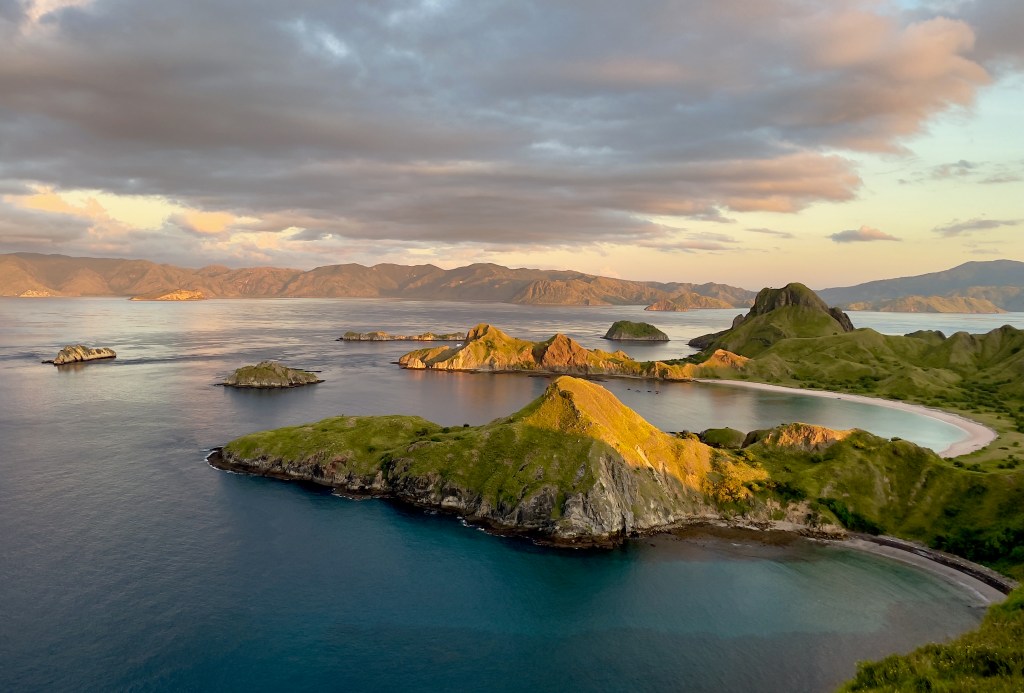
Work stress, malfunctioning dive computers and a last-minute round-trip ticket took me from sidemount training in Austria to cave diving in Budapest and finally to a liveaboard in Komodo. This wasn’t my usual approach to travel — but it was exactly what I needed.
How a Messy Month Became a Perfect Plan
In November 2024, I went to the Philippines to test a new travel rhythm: dive in the morning, work in the evening. My employer allows two remote work blocks per year — 10 days each — and I combined that with two weeks of vacation to build a monthlong dive itinerary.
The experiment was a success. After returning home, my first question was: Where in Asia should I go next?
Indonesia quickly became the front-runner. The diving is legendary, the time zone aligns well with remote work hours and overall costs are manageable.
But I didn’t plan it well — at least not at first. For the Philippines, I started organizing nine months ahead. I had dive centers confirmed and logistics dialed in. For Indonesia? I browsed a few forums and skimmed the internet. My goals were simple: avoid Bali and find a technical dive shop. The latter isn’t always straightforward.
Meanwhile, my dive computers were off for service through December and January, so local diving was off the table. February was booked with work, and I didn’t want to hassle my usual dive buddies. I finally got back in the water in March and completed my sidemount certification — but still hadn’t made any travel bookings.
I reached out to a few dive shops in Indonesia, but nothing clicked.
Two weeks after sidemount training, I loaded my gear and drove to Budapest for a cave diving trip at Molnár János. It was outstanding. That trip reignited my motivation — and planted the seed for cave diver training.
Work stress piled on, airfare to Bali stayed reasonable, and despite longer layovers, the price was right.
So I booked it. A round-trip flight to Bali. Approval to work remotely. Accommodations and diving on Gili Trawangan (Gili T). And a liveaboard in Komodo.
From Gili to Komodo: Planes, Boats and a Bit of Chaos
Indonesia is logistically complicated. My rough plan was to dive Gili T for two weeks, spend a week on a Komodo liveaboard, then wrap with shore dives before flying home.
I picked Gili T because it had the best internet infrastructure I could find, which was critical for remote work. The idea: one or two dives in the morning, work from 3:00 p.m. to 10:00 p.m. It also had a few technical dive centers — most of which knew each other.
At that point, the only thing I had confirmed in Komodo was the liveaboard with Dragon Dive Komodo. I didn’t know how I’d get there — I figured I’d sort it out on the ground. That turned out to be a good call.
While I was diving on Gili T, Dragon Dive messaged me: they had to shift me to the next liveaboard due to cancellations. The new trip was a day longer and returned on May 2. My flight home was May 3. Tight, but manageable.
I looked at all the options to get from Gili T to Labuan Bajo. Only one worked. I booked a fast boat to Bali, a hotel near the airport and a morning flight on Batik Air.
It was the best outcome given the circumstances.
I had considered the Lombok ferry — $50, 30–35 hours — but the timing didn’t work. Another alternative was the “tourist cruise” from Lombok to Komodo, frequently sold from stalls across Gili T. They quoted $35(which I’m sure was just me misreading the signs), but none could accommodate a one-way trip. I dropped it.
Ultimately, I paid $150 for round-trip business class tickets on Batik Air using the Lion Air website. Their payment portal required multiple browsers and several failed attempts before accepting my card. I chose business class because my dive gear made my checked bag heavy — I’d have paid the difference in baggage fees anyway.
I used Gili Getaway for the fast boat, the same operator I had used to get there. They included a hotel transfer and confirmed logistics via WhatsApp. In a region where overpriced taxis are common, that kind of coordination is invaluable. I Highly recommend them.

First Impressions: Mixed Signals, Solid Crew
I had informed Dragon Dive that I’d need to catch the last flight out of Labuan Bajo the day we returned. They assured me that wouldn’t be an issue. Unfortunately, that message didn’t make it to the boat crew — but they adapted and made it work.
I ended up diving from day boats before the liveaboard rather than after. Dragon Dive helped book four days; I used three. I didn’t mind skipping the final day — it balanced out other issues.
The original liveaboard was four days. The new one was five — and $600 more expensive. I asked if we were square. They said yes. Yet I continued to receive automated invoices for the extra $600. I ignored them. The company didn’t follow up, and I didn’t pay it.
Paying for an unused shore diving day felt minor by comparison.
Other guests had similar experiences. Several mentioned communication issues. Some were French, like the owners, so it wasn’t a language barrier.
Boarding the Boat: It All Comes Together
I’ll cover the day boat dives in the another post. This one is about the transition to the liveaboard.
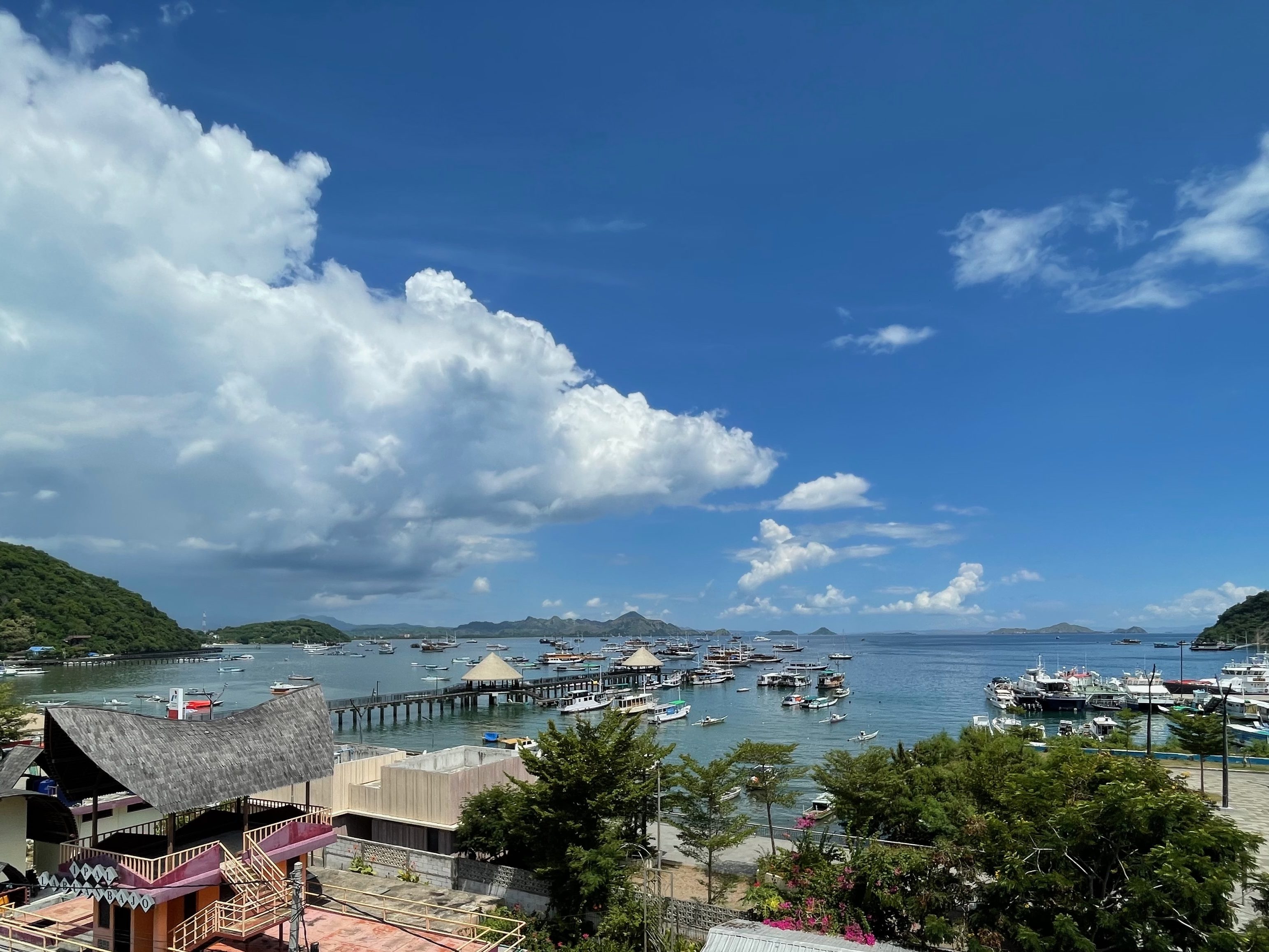
Dragon Dive also runs a “resort” — more accurately, it’s under construction. They offer dorms and private rooms, convenient for budget travelers. It also served as the meeting point for dives, gear drop-offs and the liveaboard departure. It’s about a 10-minute walk to the port.
The day before departure, one of the dive guides, Sarah — a confident, friendly, tattooed Swiss dive instructor — created a WhatsApp group for all guests. She sent meeting instructions and later used it to share media. It was a thoughtful touch I hadn’t seen before.
At 8:00 a.m. on departure day, we met at the resort. My gear had already been packed in a kit bag by the day boat crew and was seamlessly transferred to the liveaboard. The rest of our luggage was loaded into a kei truck and driven to the port. We walked. Sarah had QR codes on her phone to help us through the ferry terminal gate, where we met the tender and boarded the boat.
The liveaboard was comfortable. Not luxury, but functional and well-maintained. I’d been on fancier trips, but this setup worked fine. My cabin at the bow had air conditioning and a king-sized bed. The head was a large wet bath with a saltwater toilet and freshwater shower and sink.
We received a general briefing, met the crew and had the option to set up our own gear. I always do my own setup — partly out of habit, partly for peace of mind.
As the boat pushed off and turned toward the first dive site, the sense of improvisation faded. I had made it. Somehow, the whole messy month had pulled together.
Next time: I’ll cover the diving conditions, highlights and overall liveaboard experience. Don’t forget to check the Featured Dive Site section for detailed breakdowns and dive stories.
Subscribe to The Dive Plan so you don’t miss a thing.
 Digital Pelagics
One thought on “I booked a month in Indonesia without a solid plan. What could go wrong?”